
A lot of hookah users, particularly beginners, have trouble creating dense, tasty smoke clouds. Unnoticed problems with setup, preparation, and maintenance are frequently the cause of thin smoke. We’ll delve further into the most common offenders using community insights from sites like Reddit and Twitter, where seasoned users offer troubleshooting advice. These include inadequate raw materials, poor packing methods, poor heat control, and air leakage. By methodically addressing them, you can turn your sessions from annoying to fulfilling.
Poor Sealing and Air Leaks: The Quiet Smoke Killer
Air leaks, which are frequently referred to on Reddit as the “hidden killer” of dense clouds, are among the most pernicious issues. Your draw creates a vacuum that pulls smoke through the water and up the stem of your hookah, which operates as a sealed system. Leaks cause you to breathe in a mixture of room air and diluted smoke, which dilutes the output and throws off the heating rhythm because cold outside air cools the coals too soon, resulting in uneven burns.
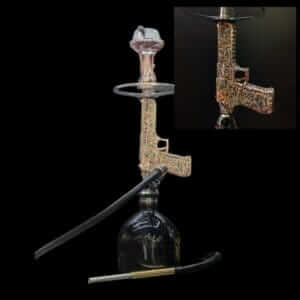 Deteriorated rubber grommets (also known as “glue rings”) that have hardened or cracked from frequent use; loose connections at the base, stem, or hose ports; and malfunctioning purge valves—one-way devices designed to remove stale smoke but capable of sticking open and permitting undesired airflow—are common causes. Users have reported on Twitter threads that smoke density can be cut in half by even a small gap, such as a slightly misaligned bowl seal. Use a “wet test” to diagnose: fill the base with water, seal everything, and gently suck. If the water levels drop unevenly or you hear hissing, use soapy water to trace the leak (bubbles suggest the area). Old grommets should be replaced (cheap silicone ones last longer), fittings should be tightened without going overboard to prevent cracking, and purge valves should be tested by blowing into the hose; if air moves freely without purging, the valve is broken. In addition to thickening smoke, proper sealing stops excessive carbon monoxide from accumulating from ineffective burning.
Uneven or Inadequate Heat: The Basis of Tasty Clouds
Mismanagement of the hookah’s heat engine, which causes vaporization, directly leads to “thin and unstable” smoke. When natural coconut coals aren’t entirely lighted, as may be seen if black spots are still visible, they don’t reach the ideal temperatures of 600–700°F, which results in incomplete combustion and more carbon monoxide rather than the vaporization of the shisha’s juices. Uneven heat flux is produced by using too few coals (start with two to three for a typical bowl) or by placing them poorly (for example, clumped on one side), scorching some tobacco while leaving others cold
\
 This can be made worse by poorly constructed heat management devices (HMDs) or excessively big foil holes, which let heat escape too quickly and cause temperatures to decrease in the middle of a session. Reddit users point out that novices frequently hurry, setting fresh coals straight on the bowl and puffing right away, but it’s important to preheat first—coconut coals require five to ten minutes to settle and distribute heat to the shisha evenly without spiking. The outcome? Wispy smoke begins a session and only after inefficient initial draws does it rise to dense clouds. Coals should always be lit until they glow red and leave no black residue. They should also be positioned symmetrically, for example, at 12 and 6 o’clock, and heavy-duty foil with small, even holes (approximately 20-30 pea-sized) should be used for fixing. Adjust vents to regulate airflow if you’re using an HMD like a Kaloud Lotus; initially, closing them causes a steady buildup of heat. Because prepared setups produce 20–30% heavier smoke from the initial pull, this patience pays of
Airflow Blockages and Packing: Managing Density for Effectivene
One of the most common rookie mistakes that is discussed in Reddit’s r/hookah forum is packing the bowl incorrectly. Filling shisha too low, much below the bowl’s edge, is known as under-packing. This keeps the heat source too far away, making it difficult for the tobacco to vaporize effectively because hot air hardly reaches the center of the tobacco. Faint, flavorless puffs are produced as the energy from the coals evaporates and fogs the glycerin and flavor
On the other hand, overpacking the shisha by compressing it like a “brick” closes up airflow pathways, charring only the top layer and leaving the bottom unused and unheated. Because heat cannot move through the mass, this results in burnt flavors and little smoke volume. Even worse is high packing, which occurs when shisha comes into direct contact with the foil or HMD. This causes the tobacco to ignite (burning at 800°F+ instead of vaporizing at 400-600°F), producing thin, acrid smoke that is filled with harsh chemical
This is further worse by bowl-specific problems: thin clay or ceramic bowls have extreme temperature swings, and blocks that have airflow holes covered resist. The “fluff pack” method is the main solution: use a fork to gently aerate the shisha to generate loose, airy layers, filling to just below the bowl’s edge (approximately a coin’s thickness, or a gap of 2-3 mm to foil/HMD). Avoid pressing until instructed to do so for the majority of contemporary shishas, such as Al Fakher (for example, Tangiers needs denser packs for its dark leaf). Starting with a “donut” shape—higher corners, lower center—is advised by Twitter recommendations to ensure equal heating. By ensuring that every draw draws vapor from the entire bowl, this maximizes evaporation and increases smoke thickness, frequently increasing session time and density.